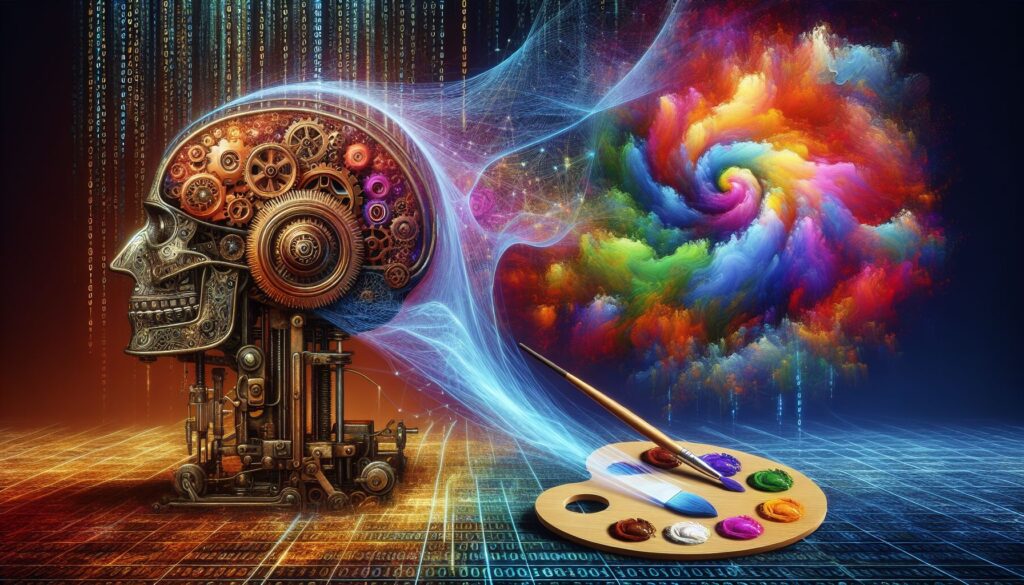
Howdy tech enthusiasts! Today, we’re jumping into the wild world of generative AI. Yep, that’s the same field responsible for those quirky art pieces and eerily human-like conversations you’ve probably seen popping up all over your social media feeds. It’s an area that’s been exploding with innovation, and as a technophile, I’ve got to tell you, I’m more than jazzed about where this is headed.
The Canvas of Creativity
Let’s kick things off by answering a question I’ve been asked more times than I care to admit: What is generative AI? Think of it as the love child of artistic imagination and machine learning. We’re talking about ways that computers can now create content, art, music, even literature, based on input data without any human hand touching the final piece. If that sounds a bit like witchcraft, you’re not alone.
A Brief History
We aren’t exactly newcomers on this road to creative computing. Back in the day, Alan Turing, that British genius everyone adores, was mulling over machines that could learn. Fast forward to the 21st century, and we’re watching as algorithms like GANs (Generative Adversarial Networks) and transformers make Turing’s dreams blush with pride. Remember OpenAI’s GPT? Yep, these powerhouses are what fuel a lot of today’s AI-generated content.
The Fine Arts…But Better?
I had a friend who received a digital canvas created by an AI as a birthday gift. At first glance, I swear it looked like something a human had worked on for months. She then pulled up an app on her phone and in 30 seconds flat, she generated an alternative version, personalizing it even further. Boom, art at your fingertips. The kicker? No two pieces are ever the same. Take that, Van Gogh!
What This Actually Means
Now, let’s shift gears to talk about the real-world implications. You might think, “Great, more distractions!” But trust me, this tech is more than just a novelty.
Enhancing Human Creativity
Let me tell you, even if you struggle to draw a stick figure, these AI tools are like having Picasso himself giving you a nudge. Tools like DALL-E and Midjourney are changing how we think about creativity. Instead of replacing human artists, they’re pretty much handing us a superpower, a “creativity exoskeleton,” if you will. And if you’re an artist struggling with inspiration, you’ll find this technology can be one heck of a muse.
Making Art Available to Everyone
Maybe you’re thinking, “This sounds like it’s only for techies with serious coding skills.” Not so! Generative AI is putting the tools of creation into the hands of virtually anyone with a computer or smartphone. Yes, even Grandma with her rambunctious cat videos! This shift is incredible: it levels the playing field, allowing kids in remote villages and inner-city youths alike to craft stories, generate visual pieces, and imagine musical compositions like they never have before.
Ethical Dilemmas
Now, of course, we’re walking a fine line here, and there are some caveats. Case in point: the ethical concerns. We’re talking about generated content that could be passed off as original human work, deep fakes, and you-name-it. If we’re not cautious, this could get wild, sorta like handing a teenager car keys before they’ve had their first driving lesson.
Where We’re Headed
Okay, scoot to the edge of your seat. This is the part where I bring out my crystal ball and gaze into the horizon of generative AI.
A New Way to Tell Stories
Imagine storyworlds so immersive you’d be able to literally “walk through” a novel. That’s right, AI won’t just spit out text or static images. We’re talking multi-sensory experiences that make you feel like Frodo on a quest through Middle-Earth. In a decade, I suspect we’ll be cradling virtual reality headsets and augmented reality glasses that turn our daily commute into a heroic saga, or perhaps a slapdash comedy, depending on the AI’s mood and your preferences.
The Economics of Creative Content
It’s not just creatives who are intrigued. Investors are raising their eyebrows, too. We’re on the cusp of a revolution in creative content production that may completely reinvent major industries like publishing, gaming, and advertising. Picture logos and branding that change in real-time to fit consumer trends, or best-selling novels co-authored by AI counterparts.
Education and Skill Development
And what about our kids? Our education system has some catching up to do. Imagine schools investing in generative AI programs to train young minds in creative problem-solving from a young age. After all, future jobs, many of which likely don’t even exist yet, will undoubtedly rely on this tech. We might be looking at classrooms that pivot away from rote memorization and instead, teach kids how to use AI to amplify their natural creativity.
Wrapping It Up
If you’re anything like me, you’ve got a head full of possibilities and a heart racing with excitement. Sure, generative AI is a game-changer, but its real power lies in the potential to amplify human capability by boosting creativity, imagination, and personalized experience.
And while we watch it grow, let’s try to be thoughtful architects of its direction, embracing creativity while acknowledging the moral puzzle pieces scattered about this new territory. There’s no doubt we’re on the edge of an era where art and innovation go hand in hand, a world where creativity knows no bounds and imaginations run free.
Feel free to share your thoughts on this wild journey. What’s your take? Could this be a renaissance for artists and technologists alike, or a rollercoaster ride with as many pitfalls as it has peaks? Let’s chat about it!