
The Term That Went Viral, and What It Actually Means
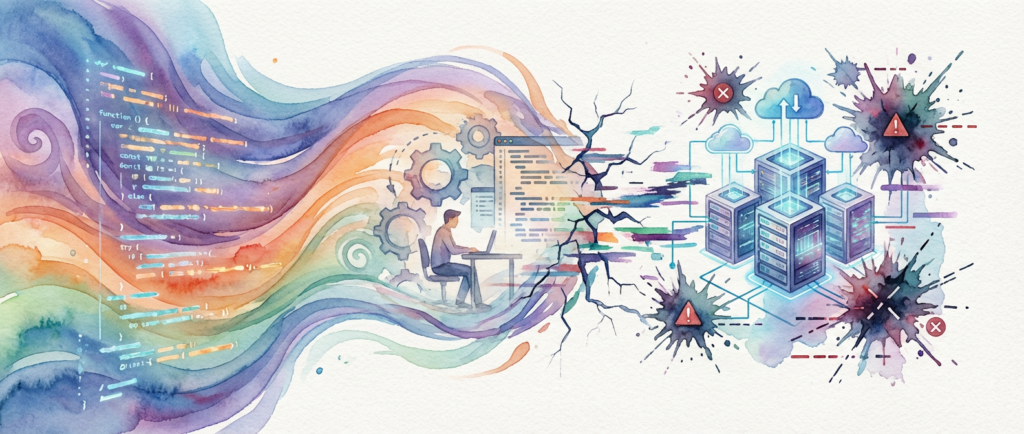
A few months back, Andrej Karpathy posted something on X that crystallized what a lot of senior engineers had been observing quietly in Slack channels and code review threads. He called it “vibe coding” — the practice of treating large language models as your primary code-generation engine while you shift into a directorial role, essentially prompting your way through features rather than writing them yourself. The post landed hard because it named something that previously existed in a fuzzy gray area, discussed in whispers among architects worried about team dynamics.

Within weeks, the term exploded across developer communities. Junior developers started building their entire skill set around prompt engineering rather than algorithmic thinking. Some mid-level engineers restructured their workflow entirely around LLM output. The viral moment wasn’t surprising. It offered a seductive narrative: write less, move faster, delegate the mechanical parts to the AI. Except the second-order effects are now showing up in the places where seductive narratives always show up: production logs, on-call pages, and in the quiet conversations between engineering leads and their managers about why code quality metrics are drifting.
If you want to understand the specific mechanics of what Karpathy was describing, Andrej Karpathy’s Original Vibe Coding Post captures the concept with precision. But the real story isn’t in that single post. It’s in what happened after.
Speed Gains and the Bugs That Follow
Here’s where the data gets interesting, and also where I want to be careful not to strawman AI-assisted development. A 2025 survey from Uplevel analyzed engineering teams using AI coding tools at scale and found that time-to-PR dropped by 40 percent. That’s legitimately impressive. You can quantify that. Your sprint velocity goes up, your deployment frequency increases, and your management chain sees the metrics they care about moving in the right direction.
Then you look at the 30-day post-merge window. Post-merge bug reports increased by 41 percent. That’s not a rounding error. That’s not noise. That’s a pattern. The bugs aren’t appearing during CI, they’re making it through, getting deployed, and hitting users. When I say making it through, I mean slipping past your test suites, your code reviews, and your linting rules. Uplevel Developer Productivity Research digs deeper into these patterns if you want specifics, but the headline is clear: you’re trading stability for throughput.
Stripe’s engineering team did internal audits on this exact problem and documented what they found. The errors weren’t random. They were systematic. Off-by-one errors that slipped through bounds checking. Error-handling patterns that looked syntactically correct but didn’t actually catch the edge cases they were meant to catch. These are the kinds of bugs that senior engineers catch in code review if they’re paying attention, but they require the kind of attention that becomes harder to maintain when pull request volume is up 40 percent and your team is trained to move fast.
The Junior Developer Squeeze and What It Means for Your Industry
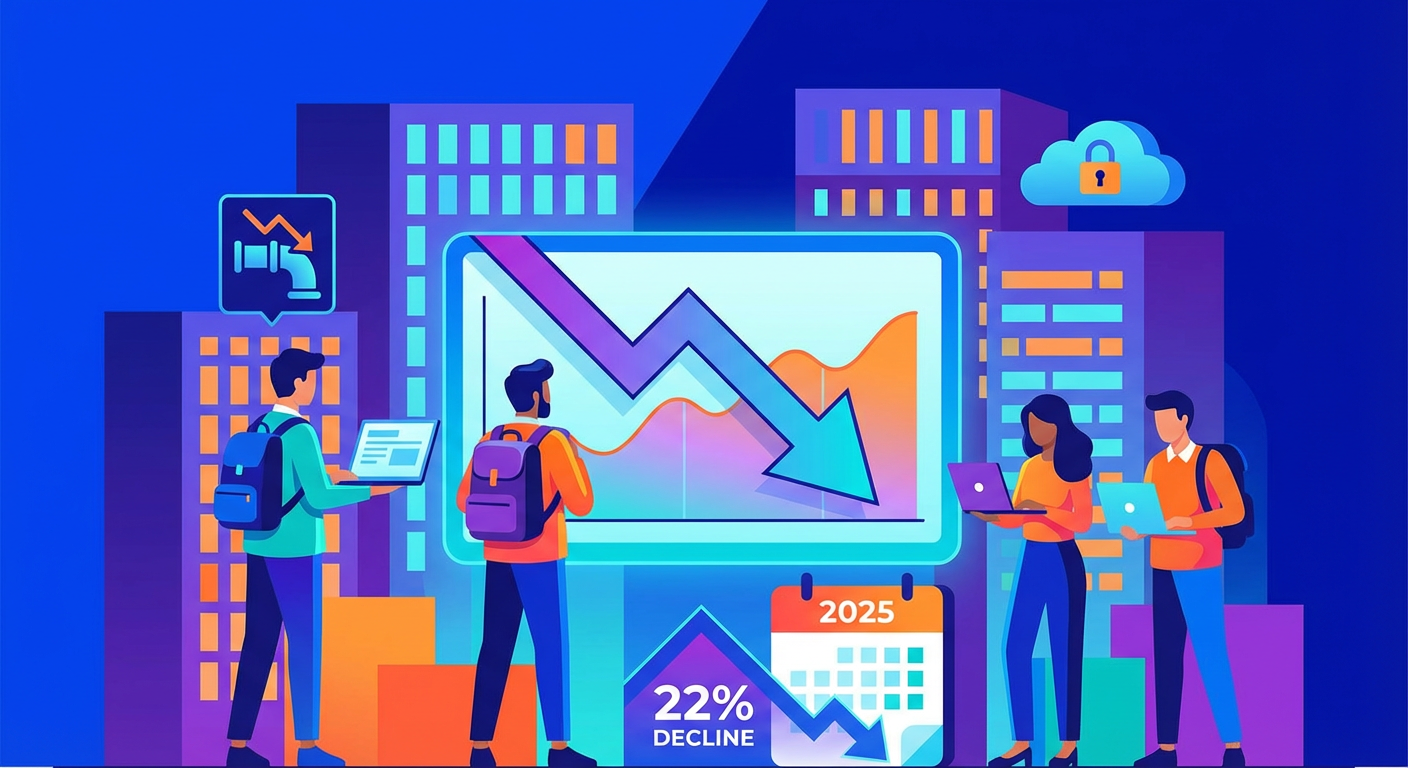
The third piece of this story is harder to ignore because it’s affecting people directly. Job postings for entry-level software engineering roles at companies with over 1,000 employees declined 22 percent year-over-year in 2025. That’s according to Revelio Labs data, and it correlates almost perfectly with the timeline of vibe coding adoption across the industry.
Think about what that means for a moment. Companies got faster with AI-assisted development. They needed fewer junior developers to hit their velocity targets. So they stopped hiring junior developers. That’s a rational short-term business decision that creates a long-term structural problem. You’re not just reducing hiring. You’re cutting off the pipeline of people who learn software engineering fundamentals in a production environment, with mentorship and real feedback loops. You end up with a generation gap where mid-level engineers exist but junior engineers don’t, and when your senior engineers retire or move to startups or just get tired of debugging AI-generated code, there’s nobody coming up through the ranks who actually understands how systems are built from first principles.
I’ve worked at enough companies to know this isn’t some abstract future problem. This is happening now. It’s affecting hiring decisions, team composition, and the kind of technical debt you’re accumulating without realizing it.
Code Complexity and the Invisible Tax
Here’s the part that keeps me up at night, and I mean that literally. I’ve had several 3 AM debugging sessions prompted by this exact phenomenon. A 2025 IEEE Software editorial cited preliminary data from three large tech companies showing that codebases where more than 50 percent of commits were AI-assisted had measurably higher cyclomatic complexity scores within 12 months of adoption.
Cyclomatic complexity isn’t just a number on a dashboard. It’s a proxy for how hard your code is to understand, modify, and reason about. When you’re prompting an LLM to generate code, you get output that works. It passes your tests. But it doesn’t necessarily reflect the simplest solution. It reflects what the model predicts is likely given the training data. Sometimes that’s elegant. Often it’s not. Sometimes it’s three nested conditionals when one would do. Sometimes it’s defensive code handling cases you don’t actually need to handle. It accumulates. Every developer who touches that code adds their own layer of AI-generated defensive patterns, and suddenly you’ve got a codebase that’s technically correct but structurally Byzantine.
The tax comes due when you need to modify that code. When business requirements change. When you need to scale it. When you need to onboard someone new. The time you saved on the first pass gets repaid with interest during refactoring, debugging, and maintenance cycles that stretch over months instead of weeks.
What Actually Matters Going Forward
I want to be clear about something: AI-assisted coding isn’t going away, and it shouldn’t. Copilots and LLMs are genuinely useful tools. I use them regularly. The difference between using a tool well and letting a tool use you comes down to one thing: understanding. If you can’t explain why the AI generated a particular solution, if you can’t reason about its correctness from first principles, then you’re not using the tool. The tool is using you, and you’re the bottleneck that doesn’t realize it yet.
For junior developers, this is a career inflection point worth thinking about clearly. The developers who matter in five years won’t be the ones who got good at prompting. They’ll be the ones who got good at thinking. Who understand systems. Who can spot the off-by-one error in the LLM output before it ships. Who can refactor a complex codebase because they understand complexity. The AI isn’t going to teach you that. Your team needs to.
For senior engineers and technical leads, this is a question about what you’re optimizing for. Speed or stability. Growth or maintenance burden. Short-term metrics or long-term capability. You can have fast code or you can have good code. With discipline and the right review culture, you can sometimes have both. But not if you’re treating AI output as a substitute for thinking.
The interesting problems in software engineering right now aren’t about generating code faster. They’re about maintaining code well. About building teams that can sustain velocity without trading away quality. About protecting junior developers’ learning paths in an environment where the industry is actively trying to automate those paths away. If you’re dealing with these tensions at your organization, I’d genuinely like to hear what you’re seeing. Drop a comment or send a note.