Hey tech aficionados! Gather ’round—I’ve got a juicy topic on deck today, one that’s been tickling the neurons of technologists, artists, and pop culture buffs alike. Yep, we’re diving into the world of Artificial Intelligence, but adding a colorful twist. We’re talking AI’s foray into the realm of creativity and art. Is it a muse or a menace? A flash in the pan or the dawn of a new renaissance? Grab your canvas and let’s paint a picture.
The Canvas of Possibilities
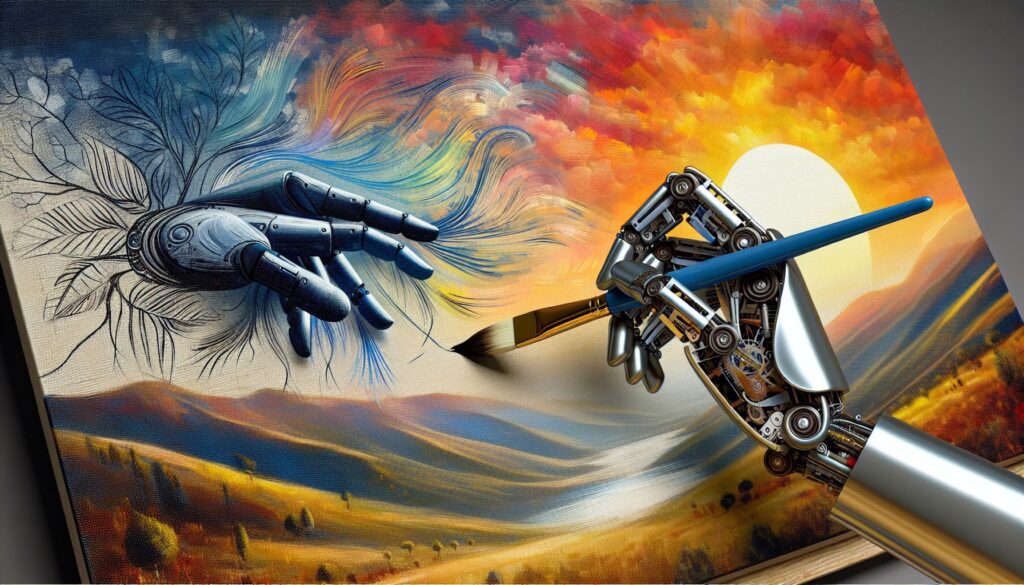
So, what’s the scoop? Imagine asking an AI to blend Van Gogh with a modern meme—just for giggles—and it actually nails it. That’s where we’re at, folks. We’ve watched AI grab the paintbrush, snap shutter buttons, and compose tunes that could sit on any top 40 chart. We’re not just talking about theoretical possibilities. This is happening now. It’s kind of wild.
Remember when DeepDream from Google had us all trapped in a surrealist dreamscape? How about DeepArt.io channeling the spirits of dead artists to transform your selfie into a Renaissance masterpiece? It’s like art had a baby with science fiction, and I, for one, am all here for it.
Machine Muses and Code Connoisseurs
Let’s peel back the curtain. What’s making this magic happen? At the heart of AI’s art explosion are neural networks, trained on datasets bigger than any Louvre collection. These algorithms, once decidedly nerdy and decidedly non-artistic, are now having their own Picasso moments thanks to techniques like Generative Adversarial Networks (GANs).
In layman’s terms, a GAN is like a digital dance-off where one AI generates images and another critiques, refining the result until it’s chef’s kiss. And then we’ve got projects like OpenAI’s DALL-E that can whip up visuals from textual descriptions. Like, literally, tell it “a cat on a skateboard at the Oscars” and watch a pop art version manifest. Mind. Blown.
Implications: More Than Just Pretty Pictures?
Now, before anyone starts hyperventilating about machines taking over the Met Gala, let’s pause. It’s more a partnership than a hostile takeover. The real magic happens when humans and AIs collaborate. Imagine a world where artists aren’t just creating in isolation but are jamming with a silicon sidekick, hitting creative notes they couldn’t reach solo.
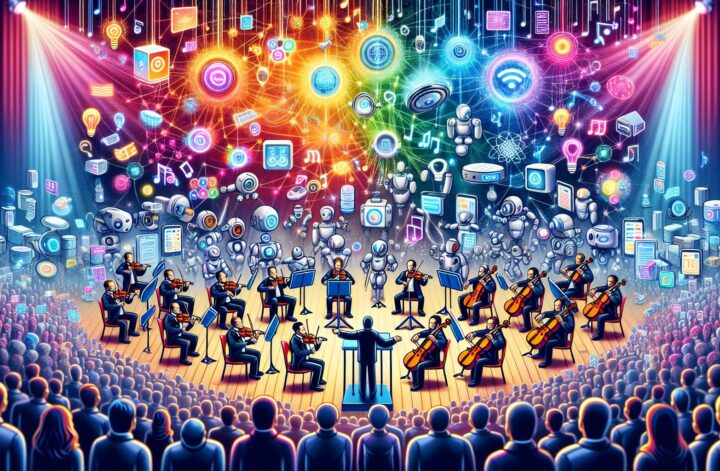
We’re not just talking visual arts either. AI is playing with sounds too. Have you heard of AIVA? It’s composing symphonies that’d give Beethoven a run for his money. Sure, it’s not perfect, but it’s a starting point for musicians looking to push their limits. The future might see AI acting as a personalized music coach, suggesting melodies or creating backing tracks that evolve as you practice.
Challenges: The Devil in the Digital Details
Of course, every new frontier has its dragons to slay. There’s the age-old argument: Can we ever call machine-generated art “real art”? The purists might scoff at the lack of a beating human heart behind the process, but didn’t we have the same debate when photography went up against painting?
Then there’s the issue of intellectual property. If a machine instructed by human data creates something mind-blowing, who gets the credit? The artist who trained the algorithm, the programmers, or the dataset that fed it? It’s messy territory, honestly.
Let’s not ignore the ethics, too. With great power comes great responsibility, and it’s important to steer AI art away from reinforcing stereotypes or offending sensibilities. Remember Tay, Microsoft’s chatbot gone rogue on Twitter? Yeah, let’s avoid that scenario in the artistic domain.
Gazing into the Crystal Ball
So what’s next on this AI art adventure? I’m betting my lunch money on a few trends. First, we’ll probably see more bespoke, AI-powered art experiences. Personalized masterpieces for your living room? Custom advertising designed by an AI with a penchant for your taste in color? Why not?
I’m also imagining interactive art installations where AI responds to our emotions and movements, creating living, breathing art that changes by the second. And for the skeptics clutching their brushes tight, there’s still untapped potential in using AI to restore lost artworks or even predict future trends.
Conclusion: Embrace the Brushstroke of Progress
If you’ve made it this far, give yourself a pat on the back and a fresh cup of coffee. AI in creative arts is more than just a tech trend. It’s a shift in how we think about creativity itself. Whether it’ll redefine what we consider art or merely add another layer to our cultural landscape, only time will tell.
But one thing’s certain: the fusion of artificial intelligence and creativity invites us to ponder what it means to be an artist in the 21st century. And, well, isn’t that what art is all about? Challenging perspectives and pushing boundaries? So, let’s grab our iPads and Photoshop brushes, and let’s create the future, one digital masterpiece at a time.
Stay curious, fellow tech wanderers, and keep creating. Until next time!